
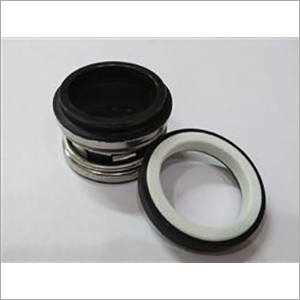
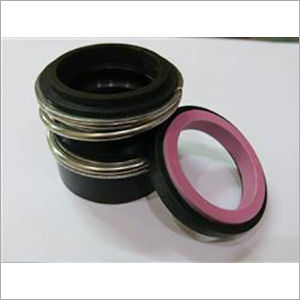
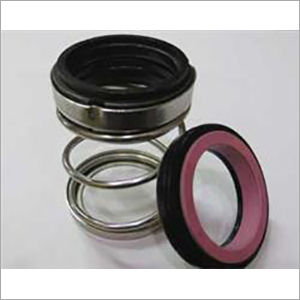
2100 Mechanical Shaft Seals
1000.00 - 8000.00 INR
Product Details:
- Application Pumps, Mixers, Compressors, Agitators
- Theory Mechanical seal with secondary elastomer
- Hardness Standard face hardness 80-90 HRC
- Style Single coil spring, unbalanced, pusher type
- Material Carbon, Silicon Carbide, Ceramic, Stainless Steel
- Temperature -20°C to +180°C
- Pressure Up to 16 bar
- Click to View more
X
2100 Mechanical Shaft Seals Price And Quantity
- 1000.00 - 8000.00 INR
- 200 pcs Piece
2100 Mechanical Shaft Seals Product Specifications
- Pumps, Mixers, Compressors, Agitators
- Carbon, Silicon Carbide, Ceramic, Stainless Steel
- Mechanical seal with secondary elastomer
- Component seal, rotary and stationary parts
- Sealing rotating shafts to prevent leakage
- Shaft diameter 10 mm to 100 mm
- Standard face hardness 80-90 HRC
- Up to 20 m/s
- Single coil spring, unbalanced, pusher type
- -20°C to +180°C
- Up to 16 bar
- Suitable for water, oils, mild chemicals, light slurries
- Low maintenance requirement
- Independent of direction of rotation
- Carbon vs Ceramic/SiC/TC
- Zero visible leakage under operating conditions
- DIN 24960/EN12756
- SS304, SS316
- NBR, EPDM, Viton, PTFE
- Up to 0.05 mm
- Easy to install, replaceable
- Various seats available (e.g. L1K, G6, G7)
2100 Mechanical Shaft Seals Trade Information
- 1000 Piece Per Day
- 2-3 Days
- Yes
- Free samples are available
- All India
Product Description
We are involved in offering a wide range of 2100 Mechanical Shaft Seals to our most valued clients. Our range of these are widely appreciated by our clients which are situated all round the nation. We offer our range of it at most affordable prices.
We introduce ourselves as an eminent trader and supplier of an extensive array of 2100 Mechanical Shaft Seals. Prior to dispatch, our quality controllers run numerous tests on the entire range on various parameters of quality and durability. The offered equipment is manufactured using superior quality components with the aid of sophisticated techniques at the vendors' end. Moreover, our precious clients can purchase it in different technical specifications at reasonable price from us within promised time frame.
Features:
- Sturdy design
- Highly durable
- Application specific design
Versatile Media Handling
The 2100 Mechanical Shaft Seal is engineered to provide reliable sealing in various media, including water, oils, mild chemicals, and light slurries. With multiple elastomer optionsNBR, EPDM, Viton, and PTFEit ensures optimal compatibility with a wide range of fluids. This versatility makes the seal suitable for diverse industrial sectors including chemical processing, water treatment, and general manufacturing.
Robust Construction and Standards Compliance
Constructed from high-hardness materials such as carbon, ceramic, silicon carbide (SiC), tungsten carbide (TC), and stainless steel (SS304/SS316), the 2100 Series meets DIN 24960 and EN12756 standards. It reliably operates under pressures up to 16 bar and shaft speeds up to 20 m/s. These mechanical seals accommodate runouts up to 0.05 mm and deliver zero visible leakage under normal operating conditions.
Simple Installation and Low Maintenance
Ease of installation and replacement is a key feature of the 2100 Mechanical Shaft Seal, reducing downtime and maintenance costs. Its component seal design, with rotary and stationary parts and various seat types, allows for straightforward fitting and service. The seals robust construction and durable secondary elastomer minimize maintenance requirements, ensuring long service life in demanding environments.
FAQs of 2100 Mechanical Shaft Seals:
Q: How is the 2100 Mechanical Shaft Seal installed and maintained?
A: Installation of the 2100 Mechanical Shaft Seal is straightforward thanks to its component seal design and replaceable parts. Routine maintenance is minimal due to robust materials and construction; simply inspect during scheduled equipment checks and replace the seal if wear or leakage is observed.Q: What elastomer options are available for the 2100 Mechanical Shaft Seal and how do they benefit media compatibility?
A: Elastomer options include NBR, EPDM, Viton, and PTFE. Each provides tailored chemical and temperature resistance, allowing the seal to handle a wide variety of fluids such as water, oils, mild chemicals, and light slurries, thus increasing application flexibility.Q: When should I choose a carbon versus ceramic, SiC, or TC face combination?
A: Choose the face combination based on your media and operating conditions: carbon vs ceramic is suited for general purpose and clean media, while carbon vs SiC or TC offers higher durability and chemical resistance for more abrasive or corrosive applications.Q: Where can the 2100 Mechanical Shaft Seal be applied?
A: This seal is ideal for pumps, mixers, compressors, and agitators across industries such as chemical processing, water treatment, food and beverage, and manufacturing, providing reliable sealing wherever rotating shafts require leak prevention.Q: What is the typical process for replacing the 2100 Mechanical Shaft Seal?
A: To replace the seal, stop the machine, remove the old seal from the shaft, clean the surfaces, and fit the new seal into place as per the manufacturers instructions. Its modular component structure simplifies the process and minimizes downtime.Q: How does the seal ensure zero visible leakage under operating conditions?
A: The precision-engineered seal faces, robust spring mechanism, and secondary elastomer work together to prevent leaks. The seal is tested for tight tolerances and quality materials, ensuring zero visible leakage during standard operation.Q: What are the main benefits of using the 2100 Mechanical Shaft Seal compared to gland packing or other alternatives?
A: Compared to traditional gland packing, the 2100 Mechanical Shaft Seal provides superior leak prevention, lower friction (reducing energy consumption), longer service intervals, minimal maintenance, and ease of installationmaking it a cost-effective and reliable sealing solution.Tell us about your requirement

Price:
Quantity
Select Unit
- 50
- 100
- 200
- 250
- 500
- 1000+
Additional detail
Mobile number
Email

Other Products in 'Mechanical Shaft Seals' category

Contact Details
SIDDHI ENGINEERING WORKS
GST : 27ACWPK6408N1ZS
- 233 (I), B.T. Compound, Shree Ram Marg, Malad (W), Mumbai - 400064, Maharashtra, India
- Phone : 08045479968
- Mr Arun Y. Keni (Proprietor)
- Mobile : 08045479968
- Send Inquiry
 Send Inquiry
 |
SIDDHI ENGINEERING WORKS
All Rights Reserved.(Terms of Use) Developed and Managed by Infocom Network Private Limited. |
